
 Fullscreen
Find out how the RennSport nameplate has evolved over the past three decades in this comparison between the old time legend and its modern-day counterpart
by Amrit Balraj on June 9, 2024, 06:00The RS badge has been synonymous with peak performance within the Porsche family for decades. More than a badge, the "RS" represents a declaration of dominance. It signifies the pinnacle of Porsche engineering, where razor-sharp handling and earth-shattering performance converge. The 1970s saw the birth of a legend: the Porsche 911 Carrera RS 2.7. Born to devour the race track, the 911 Carrera RSR 2.8 was a force to be reckoned with. Its lightweight body was stripped of everything unnecessary, with a particularly potent engine beneath the hood primed for exhilarating performance This wasn’t just any 911; it was the very first to wear the coveted "RS" badge, signifying "RennSport" or "racing sport" in German. One of the greatest examples from the Porsche stable to ever wear the badge is the 1995 911 Carrera RS. But how does it compare to the current GT3 RS? Let’s take a look.
German Engineering at Its Finest: A Detailed Look at Carrera RS vs. GT3 RS
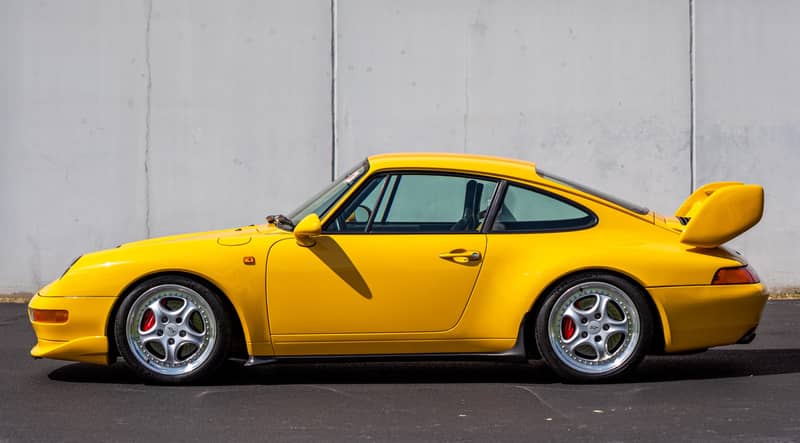
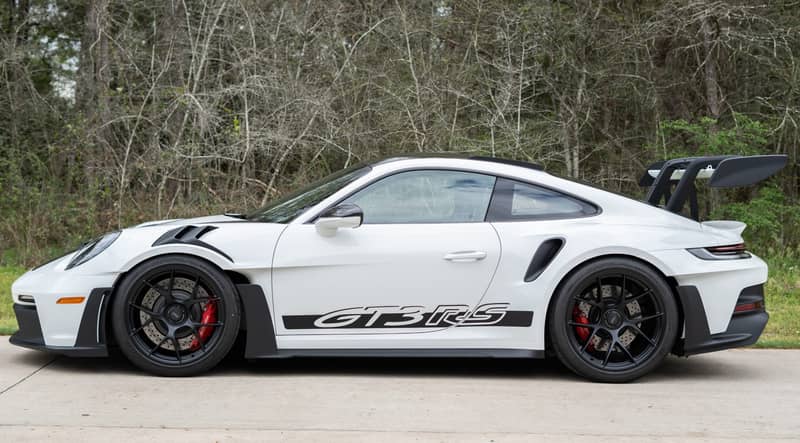
Over the past 30 years, 911 has undergone significant upgrades to become a sophisticated engineering marvel. However, the 992 symbolizes old-school cool, which still thrills those lucky enough to get behind the wheel of one. Both these cars come from the same heritage and share the company’s DNA. They are lightweight, stripped-down RWD sports cars with the engine in the rear, and a huge wing designed to offer downforce. Ultimately both of these cars are thoroughly desirable performance vehicles.
| 1995 911 Carrera RS | 2024 911 GT3 RS | |
|---|---|---|
| Ground Clearance | 4.7 inches (119 MM) | 3.93 inches (100 MM) with an optional front-axle hydraulic lift which can raise the front of the car by 1.5 inches |
| Tires | 225/40 ZR 18 (F); 265/35 ZR 18 (R) | 275/35 R20(F); 335/30 R21(R) |
| External Features | A massive fixed rear spoiler, rigid seam welded body shell, 322mm cross-drilled and ventilated disc brakes with four-piston calipers, and 3-piece, 18-inch aluminum wheels | Large fixed rear wing with active aero which adjusts for maximum downforce, 390 mm grooved and ventilated steel disc brakes with six-piston aluminum monobloc racing brake calipers and 3-piece 18-inch wheels magnesium wheels |
| Internal Features | The rear seats were replaced with racing seats. Sound dampening was also lessened for optimum weight reduction | The rear seats were replaced with racing seats. Carbon fiber trim pieces, Porsche’s race-tex dashboard covering, sound dampening reduced to experience engine sounds more fully |
| Options | The Clubsport Option added a roll-cage, suspension strut brace, and lightweight bucket seats. Gear ratios were revised for shorter gear shifts. Inside, carpets, some power features, and even the radio are ditched to shave weight | Clubsport Package (free): This free option equips the car for track use with a roll cage, racing seat belts, fire extinguisher, and battery disconnect switch. |
Weissach Package (additional cost): This package focuses on weight reduction and performance. It uses lightweight materials like carbon fiber for the hood, roof, wing, and some suspension components. It also offers special magnesium wheels and lightweight interior trim. The Weissach package can even include a carbon fiber roll cage for a more hardcore track car. |
2024 911 GT3 RS Vs. 1995 911 Carrera RS Performance numbers compared

The 2024 911 GT3 RS boasts a 4.0L naturally-aspirated flat-six pushing out a monstrous 518 horsepower. The 1995 Carrera RS, while impressive for its time, utilizes a smaller 3.6L flat-six with 300 horsepower. The 2024 reigns supreme with a blistering 184 MPH top speed. The 1995 Carrera RS is no slouch, reaching a respectable 172 MPH.
The 2024 likely achieves a 0-60 MPH time in the low 3.0-second range, thanks to its advanced powerplant and lightweight construction. There are no official figures released, but the Carrera RS takes around 5.4 seconds for the same feat. In essence, the 2024 GT3 RS nearly doubles the horsepower and shaves off over 2 seconds from the 0-60 mph time of the 1995 Carrera RS. It’s a testament to the relentless pursuit of performance by Porsche engineers.
| 1995 911 Carrera RS | 2024 911 GT3 RS | |
|---|---|---|
| Engine | 3.8-liter NA flat-six | 4.0-liter NA flat-six |
| Horsepower | 300 horsepower | 518 horsepower |
| Torque | 262 lb-ft. | 342 lb-ft. |
| Transmission | 6-speed manual | 7-speed dual-clutch automatic transmission (PDK) |
| Drivetrain | RWD | RWD |
| 0-60 mph | 5.4 seconds | 3.2 seconds |
| Top Speed | 184 MPH | 172 MPH |
| Weight | 2799.87 lbs | 3196.70 lbs |
| Starting MSRP | $167,000 | $184,550 |
While the 1995 911 Carrera RS was a legend for its own time, the 2024 911 GT3 RS takes performance to a whole new level. With nearly double the horsepower and significant advancements in handling and technology, the 2024 model embodies the relentless march of automotive progress.
However, the 1995 Carrera RS remains a captivating reminder of Porsche’s heritage, a car that prioritized driver engagement and raw thrills in a simpler era. Both machines are undoubtedly worthy of their legendary status, each a testament to a distinct chapter in Porsche’s unwavering dedication to building the ultimate driver’s car. You can see how they stack up in the video review below.


Amrit Balraj
When not reading up or watching videos about obscure and rare automobiles, Amrit spends his free time planning imaginary road trips on some of the best driving roads in the world, preferably in an old truck with a motorcycle strapped to the bed. Read full bio
related articles


